Comprehensive guides for India’s agri-business leaders.
Longform pillar playbooks — deeper than an insight, narrower than a report. Written by partners who have shipped the same work from the operating seat.
Where our insights are monthly field notes, our guides are reference documents you can hand to a team and ship against. Each is authored end-to-end by a practice partner, cites its sources, carries a last-reviewed date, and cross-links to the services we run for clients who want the playbook delivered rather than read.
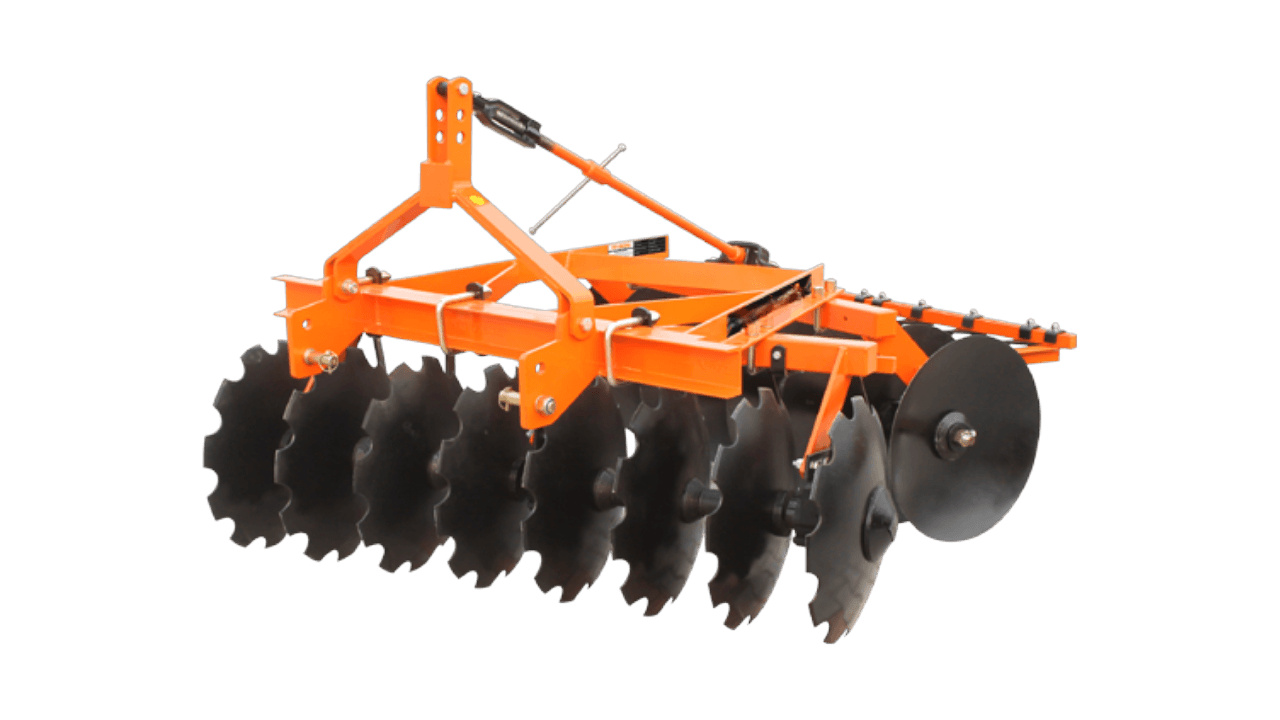
CE marking for agricultural machinery exported from India
Nobody in India issues a CE certificate, because for most agricultural implements there is no certificate to issue — you declare conformity yourself. Here is what that actually requires, what it costs, when a Notified Body genuinely is involved, and why your tractor is not in scope at all.
CE marking is a manufacturer's self-declaration, not a certificate granted by an agency. For most agricultural implements exported from India — rotavators, threshers, balers, seed drills, sprayers — you build a technical file, assess risk against the harmonised EN ISO 4254 standards, sign a Declaration of Conformity and affix the mark yourself; a Notified Body is only involved for the specific high-risk categories listed in the legislation. Tractors are excluded from machinery legislation entirely and go through EU type-approval under Regulation 167/2013. From 20 January 2027 the Machinery Regulation (EU) 2023/1230 replaces the Machinery Directive with no transition period.
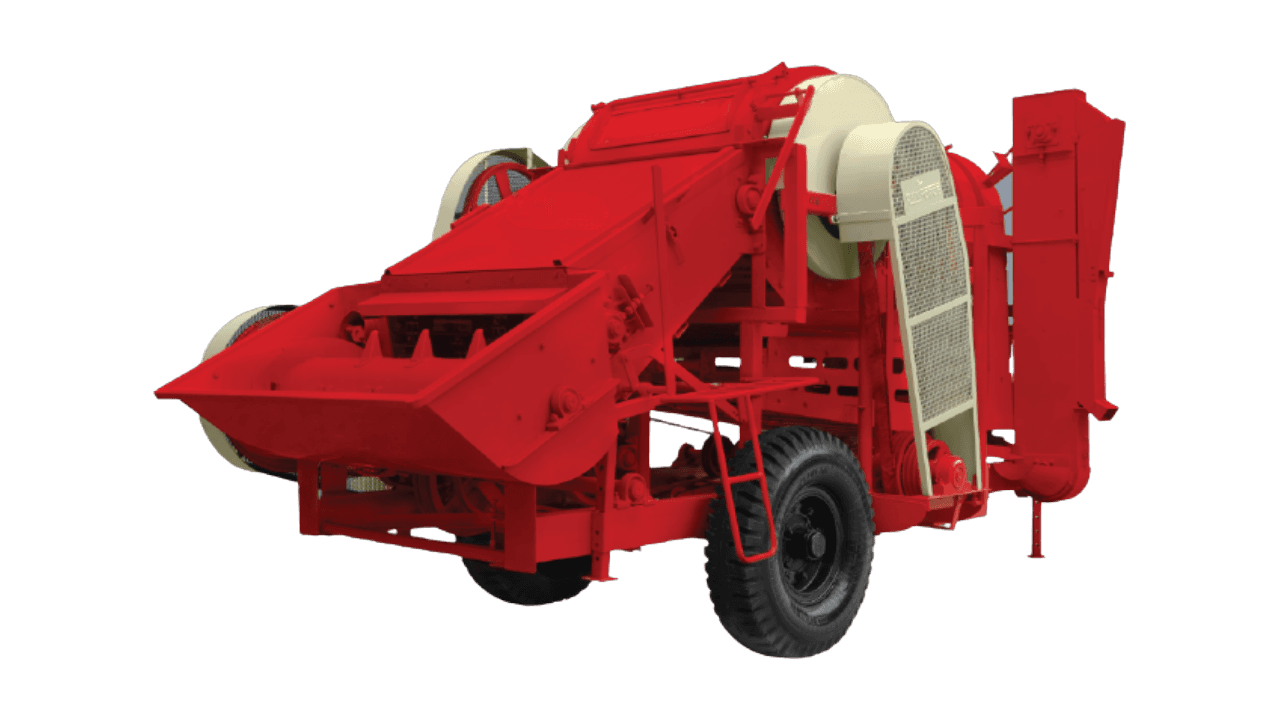
Export readiness for Indian farm-machinery manufacturers
What actually has to be in place before your first shipment — registration, the right conformity route for your machine class, the incentives you can claim, and the distribution structure that decides whether a second order follows the first.
Exporting farm machinery from India is gated far less by paperwork than manufacturers expect, and far more by destination-market conformity. Registration is a fortnight's work: IEC, AD code, RCMC. The real fork is what your machine is — a tractor goes down the vehicle type-approval route in every serious market, while an implement goes down the machinery-conformity route, and the two have almost nothing in common. This guide sets out the sequence, the conformity fork, what RoDTEP and drawback are worth, and why the OECD tractor test India already runs exists solely for exporters.
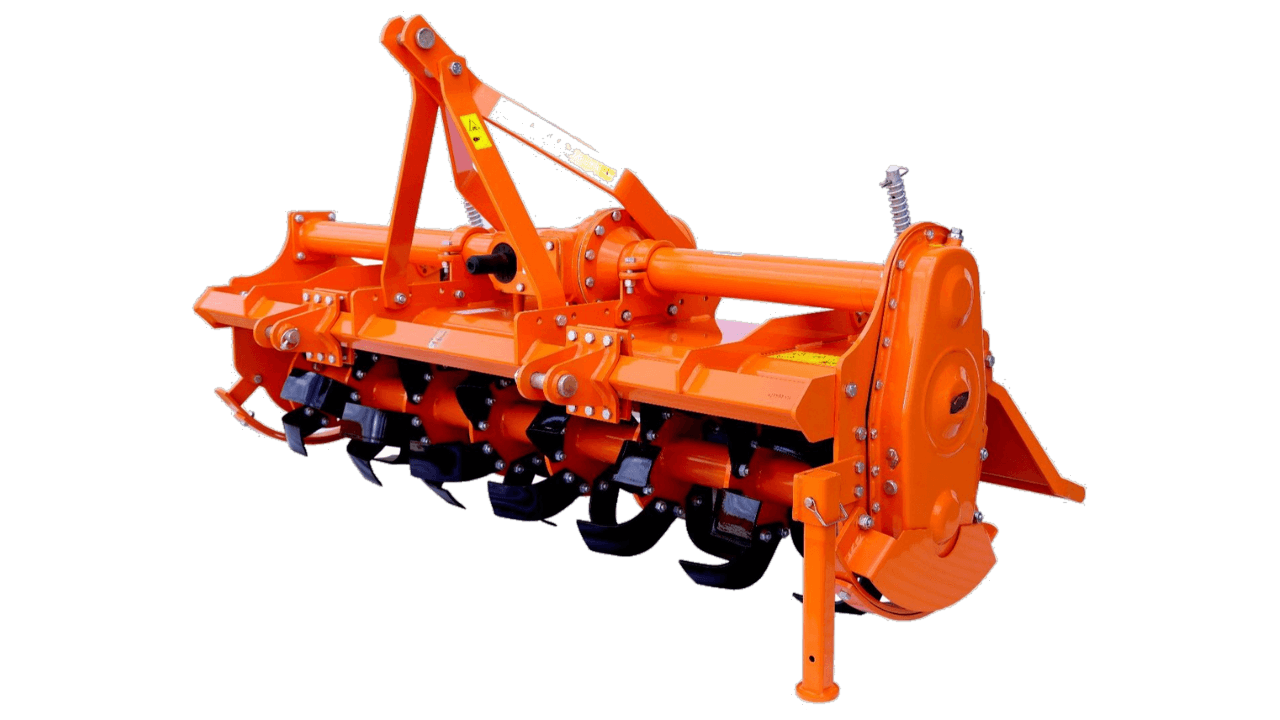
RoDTEP rates for farm machinery, by HS code
The rate against every tariff line a farm-machinery exporter actually ships under — implements at 0.9% of FOB, tractors and power tillers at 0.7% — plus the classification traps that put your machine in the wrong chapter, and the 30 September 2026 expiry now sitting six weeks out.
RoDTEP pays 0.9% of FOB on agricultural implements (ITC-HS 8432, 8433, 8436 and 8424 — rotavators, threshers, harvesters, balers, seed drills, sprayers) and 0.7% on tractors and power tillers (8701), with no per-unit value cap on any of those lines. This guide gives the tariff-item-level rates read directly from DGFT's Appendix 4R, explains why a power tiller earns a different rate from the rotavator it pulls, corrects the widely-repeated claim that rates are still cut by 50%, and flags the scheme's current expiry date of 30 September 2026.
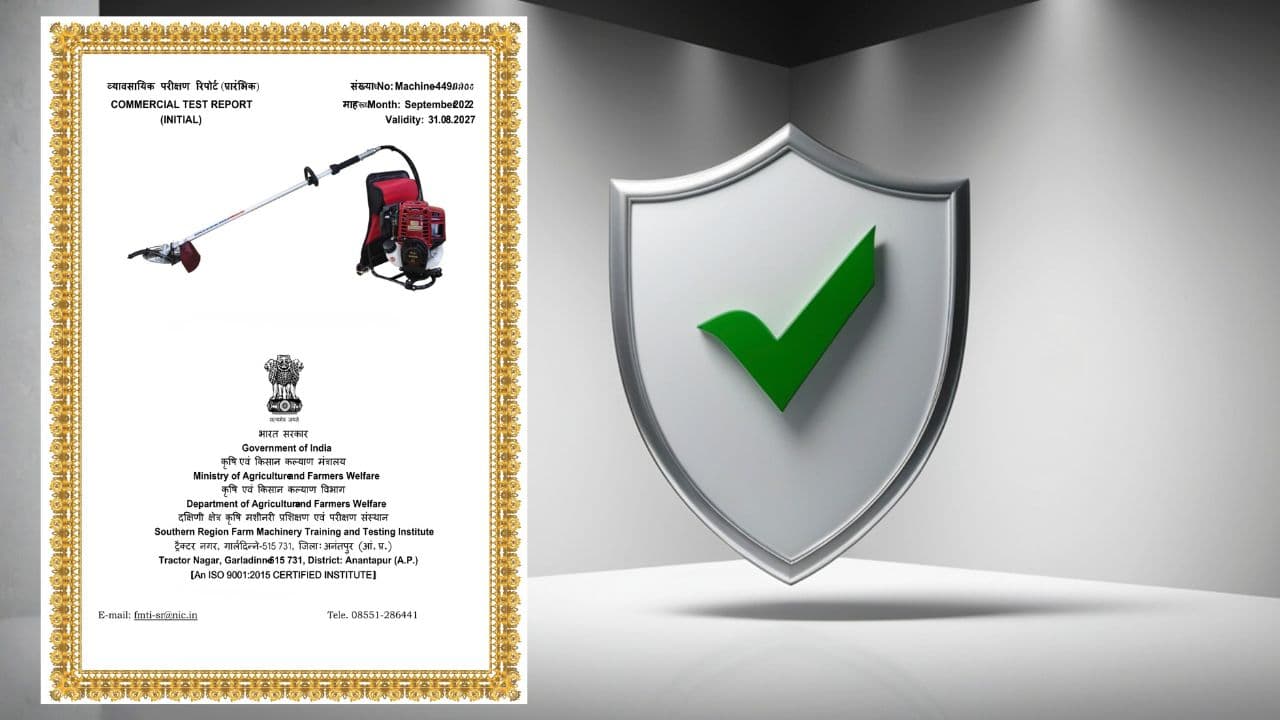
What is the validity of FMTTI certification? The complete category-wise table
FMTTI test reports expire on a fixed, category-specific schedule set by a 2018 Ministry Office Memorandum — 3 to 7 years for the initial report, 5 years for every subsequent batch report. Here's where power tiller testing, power weeder testing, power reaper testing, and battery sprayer testing each sit.
An FMTTI test report is not valid forever. Office Memorandum No. 13-24/2018-M&T(I&P), dated 19 September 2018, fixed category-wise validity periods for every machine tested at FMTTIs: 3 years for the initial (ICT) report for tractors and power tillers, 5 years for self-propelled machinery and manual/battery-operated plant protection equipment, and 7 years for most implements, combine harvesters, and tractor/engine-operated sprayers — with every subsequent batch report valid for a uniform 5 years. This guide sets out the full table, how validity is stated on the report, what happens at expiry, and where real-world evidence suggests some figures may have shifted since 2018.
What is FMTTI certification? Meaning, process, cost and timeline
FMTTI stands for Farm Machinery Training & Testing Institute — a four-centre network under the Ministry of Agriculture that issues performance test reports, not a product-conformity licence. Here's what that actually means for power tiller testing, power weeder testing, power reaper testing, and battery sprayer testing.
'FMTTI certification' is the industry name for a dated performance test report issued by one of India's four Farm Machinery Training & Testing Institutes — Budni, Hisar, Garladinne (SRFMTTI), and Biswanath Chariali. It is not a BIS-style conformity mark; it evaluates field and mechanical performance against a defined test code, and it is the document most state subsidy schemes and dealer networks check before a machine reaches a farm. This guide sets out what the certification actually consists of, how it differs from BIS and CMVR, whether it's mandatory, and realistic cost and timeline expectations.
The current farm machinery testing fee schedule across every FMTTI and FMTC
The Ministry's applicable category-wise testing charges for FY 2025-26 — where power tiller testing, self-propelled reaper testing, power weeder testing, and battery sprayer testing each sit, and how this schedule relates to a single centre's own detailed pricing.
The Ministry of Agriculture & Farmers Welfare's Mechanization & Technology Division has set out the currently applicable testing fee for every category of machinery tested at FMTTIs and FMTCs nationally, effective 01.04.2025 for FY 2025-26. Power tiller, self-propelled reaper, and power weeder testing share one ₹1,21,961 bracket; battery-operated plant protection equipment is priced at ₹69,732, separate from power-operated equipment at ₹1,83,102. This guide sets out the full schedule, how it differs in scope from a single centre's own detailed test-item pricing, and how to budget across categories.
Farm machinery testing fees in India — a 2026 budgeting guide
What power tiller testing, power weeder testing, power reaper testing, and battery sprayer testing actually cost, using SRFMTTI's revised 2026 charge schedule as a worked reference.
SRFMTTI Garladinne's revised power tiller testing charges, effective 01.04.2026, are a rare fully-itemised, dated fee schedule from a notified FMTTI centre: ₹4,07,478 with running-in, ₹3,30,590 without, both exclusive of 18% GST, on an 8% biannual revision cycle. This guide uses that schedule to show how FMTTI pricing is actually built up test-by-test, and sets out a disciplined way to budget testing fees for power weeders, power reapers, and battery sprayers — machine classes that follow the same pricing logic under their own test codes, even where a published, itemised schedule isn't publicly available.
BIS / FMCS certification for agricultural machinery
Where BIS certification bites for machinery and components, how the Foreign Manufacturers Certification Scheme fits, and how BIS scope interacts with subsidy eligibility.
BIS certification under Scheme I — the domestic ISI-mark route Indian manufacturers use — applies to specific components and machines covered by Indian Standards: agricultural pumps, engines, and many bought-in parts. It is a separate track from FMTTI performance testing and from CMVR type-approval. Manufacturers based outside India use a separate variant, the Foreign Manufacturers Certification Scheme (FMCS), to put the ISI mark on imported product. Where a component carries a mandatory BIS standard, a missing mark can block both sale and subsidy empanelment.
CMVR / TREM-IV emission norms for tractors and off-road engines
What TREM Stage IV means for tractor and engine manufacturers today, where the TREM-V trajectory is heading, and the type-approval workstreams behind both.
TREM Stage IV is the off-highway emission norm for agricultural tractors and engines, applied through AIS-137 emission test cycles and decoupled from on-road BS-VI. Tractors above ~37 kW (≈50 HP) are under TREM-IV today. A TREM-V trajectory is in draft. Emission testing runs at ARAI or ICAT in parallel with the AIS-017 type-approval cycle — it is one workstream inside the broader CMVR type-approval covered in our homologation guide.
Building and managing a farm-machinery dealer network in India
The channel playbook for manufacturers: appointment, territory, working capital and credit, demo and after-sales infrastructure, and the link between dealer reach and subsidy participation.
For a farm-machinery manufacturer, the dealer network is the business. This guide covers the practical channel decisions: how to appoint and structure dealers, how to design territory and avoid channel conflict, the working-capital and credit terms that actually move machines, the demo and after-sales infrastructure that drives repeat purchase, and why subsidy-scheme participation only converts into sales through a dealer who can handle the claim.
Getting your machine empanelled under SMAM and state subsidy schemes
The manufacturer's empanelment playbook: the FMTTI test report as the gating artifact, and how each state portal consumes it.
SMAM (the Sub-Mission on Agricultural Mechanization) is the central framework, implemented by the states. Empanelment — getting a specific make and model onto a state's approved list so farmers can claim subsidy against it — is gated by a valid FMTTI performance test report. Each state runs its own portal and rules: Punjab CRM via agrimachinerypb.com, Haryana via agriharyana.gov.in, Gujarat iKhedut 2.0 with AGR-50 model-empanelment, Tamil Nadu via the Agricultural Engineering Department, and Maharashtra's Krushi Yantrikikaran via MahaDBT. Subsidy percentages change yearly; the portals and mechanisms are stable.
ARAI / ICAT vs FMTTI: which approval does your machine actually need?
The two approval tracks Indian farm-machinery manufacturers confuse most — CMVR type-approval and FMTTI performance testing — and why you usually need both, in parallel.
CMVR type-approval (via ARAI Pune or ICAT Manesar) makes a tractor or self-propelled machine road-legal. FMTTI performance testing makes a machine eligible for SMAM and state subsidy schemes. They are different approvals for different purposes, they apply to different machine types, and for a subsidised tractor you run them as parallel workstreams. FMTTI applications go through the national Centralized Farm Machinery Performance Testing Portal — the regional institute names are nominal coverage, not a mandatory assigned centre.