CE marking for agricultural machinery exported from India
Nobody in India issues a CE certificate, because for most agricultural implements there is no certificate to issue — you declare conformity yourself. Here is what that actually requires, what it costs, when a Notified Body genuinely is involved, and why your tractor is not in scope at all.
On this page
"Which agency gives CE certification in India?" is one of the most common questions we get from manufacturers preparing to export, and the honest answer surprises people: none of them, because for most agricultural implements there is no certificate to give.
CE marking is a declaration you make about your own product. Understanding that changes what you should be buying, and stops you overpaying for a document that does not exist. This guide covers what conformity actually requires, what it costs, and the January 2027 deadline that is about to change the legal basis underneath it.
This sits inside our Certification & Homologation practice, alongside the Indian-market work.
CE marking is self-declaration, not certification
For most machinery, the manufacturer assesses conformity, compiles the evidence, signs a declaration and affixes the mark. No third party grants permission. A Notified Body is only involved where the machine falls into specific high-risk categories listed in the legislation's annex — and most agricultural implements do not.
First: is your machine even in scope?
Before anything else, establish which legal instrument applies. This is the fork that decides everything downstream.
| Machine | Instrument | Route |
|---|---|---|
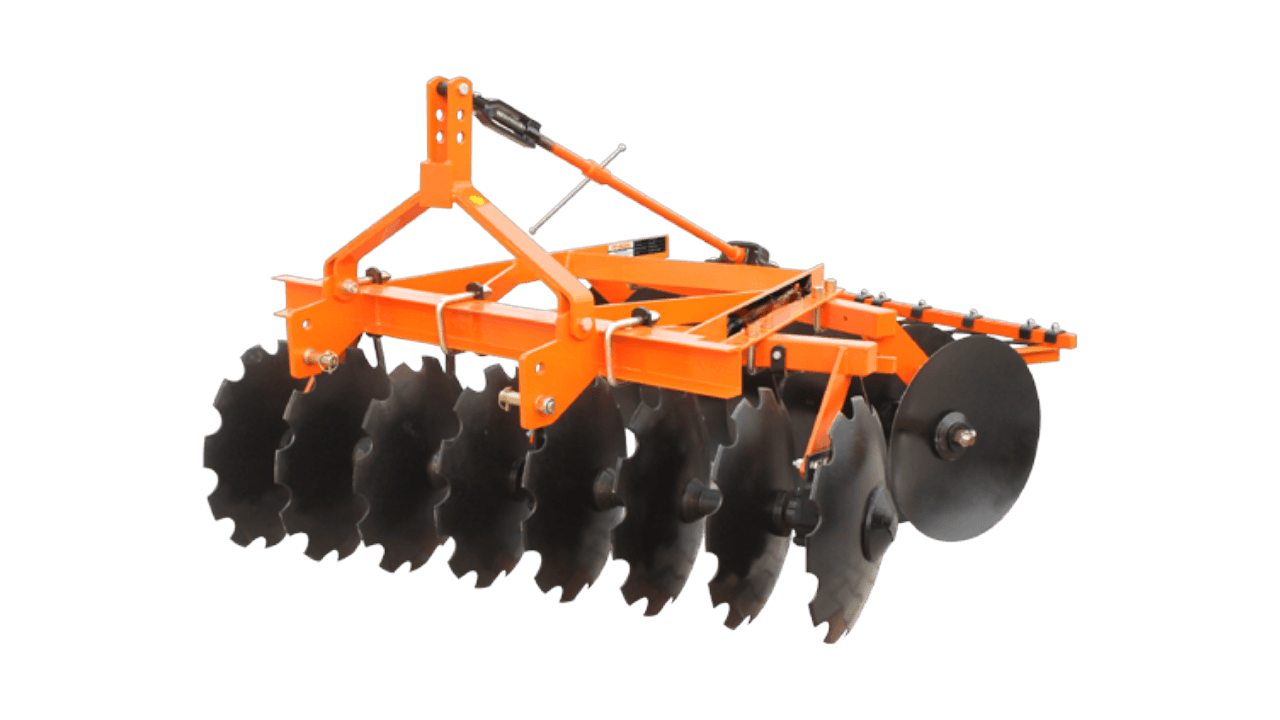
| Rotavators, threshers, balers, seed drills, sprayers, reapers, harrows | Machinery Directive 2006/42/EC, then Machinery Regulation (EU) 2023/1230 from 20 Jan 2027 | CE marking — self-declared unless in the high-risk annex |
| Tractors (category T) | Regulation (EU) 167/2013 | EU type-approval — not CE marking |
| Agricultural trailers (category R) | Regulation (EU) 167/2013 | EU type-approval — not CE marking |
| Interchangeable towed equipment (category S) | Regulation (EU) 167/2013 | EU type-approval — not CE marking |
| Partly completed machinery | Machinery legislation | Declaration of Incorporation, not a Declaration of Conformity |
What a compliant file actually contains
For a self-declared implement, the work is the file. There are five parts to it.
EN ISO 4254 is where an agricultural-machinery file should be anchored. Part 1 sets general safety requirements, with further parts addressing specific machine categories. Designing against the applicable harmonised standard gives you a presumption of conformity with the corresponding essential requirements — which is the difference between a file that defends itself and a file you have to argue for.
You must also be able to produce the file on request for up to ten years after the last unit is placed on the market. That is a records-retention obligation most first-time exporters do not plan for.
You need someone established in the EU
Market-surveillance rules require an economic operator established in the Union to be answerable for the product. In practice that is your importer, or an authorised representative appointed by written mandate. Their details appear on the documentation, and they must be able to hand the technical file to an authority that asks.
For a manufacturer selling through one EU distributor, this is usually solved by making that distributor the importer — but it has to be established deliberately, in writing. Discovering at a border that nobody in the Union is responsible for your machine is an expensive way to learn the rule.
What it costs, honestly
The mark itself is free. There is no fee to affix CE.
| Cost line | What drives it |
|---|---|
| Risk assessment and technical file | Machine complexity and how much design documentation you already hold. The dominant cost for most implements. |
| Testing against harmonised standards | Which standards apply and whether you can test in-house. Structural, guarding and noise testing are the usual items. |
| Translation of instructions | Number of Member States targeted. Scales linearly and is routinely underestimated. |
| Notified Body fees | Only if your machine is in the high-risk annex. Zero for most implements. |
| Authorised representative | Ongoing, if you appoint one rather than relying on an importer. |
For a straightforward self-declared implement, engaging competent help to build a compliant file typically runs in the low lakhs of rupees per machine family, plus testing. The variable that moves this most is how much documentation already exists — a manufacturer who has been through FMTTI performance testing and holds real design records starts much further along than one working from shop-floor drawings.
Note the unit of cost: per machine family, not per model. Variants sharing a design and hazard profile can generally sit within one file, which is why it pays to think about the family boundary before you start rather than commissioning work model by model.
The January 2027 deadline
Regulation (EU) 2023/1230 entered into force on 19 July 2023 and applies from 20 January 2027. Machinery placed on the EU market up to 19 January 2027 does so under the Machinery Directive 2006/42/EC; from the following day it is the Regulation.
Two things make this matter more than a routine renumbering:
- There is no transition period. The changeover is a date, not a window. Files built purely against the Directive will need revisiting for machines placed on the market after it.
- The Regulation applies directly in every Member State, without national transposition. That removes a layer of country-by-country variation, which is genuinely good news for exporters — but it also means the requirements arrive everywhere simultaneously.
The Regulation also brings software integrity, updates and connected functions into scope alongside mechanical safety. For most Indian implement makers that changes little today. For anyone shipping machines with electronic control, telematics or app connectivity — an increasing share of higher-value equipment — it is a new documentation obligation.
How this connects to your Indian certifications
It does not transfer — but it does compound. Your BIS licence and FMTTI reports are Indian-market instruments and carry no conformity weight in the EU. What they represent is a machine that has been formally evaluated, with performance data on record and a manufacturer who has been through the discipline before.
That is a real head start on a technical file, and it is why the manufacturers who find CE marking manageable are usually the ones who already took domestic certification seriously. The ones who find it brutal are those treating documentation as something generated for regulators rather than something the factory actually keeps.
For the wider picture — registration, incentives, distribution — see our guide to export readiness for farm-machinery manufacturers. If you would rather have the conformity route established and the file built properly, that is what our Certification & Homologation practice is for.
Frequently asked questions
- None, and none can. CE marking is a manufacturer's self-declaration of conformity with EU legislation, not a certificate granted by a third party. For most agricultural implements you assess conformity yourself, compile a technical file, sign an EU Declaration of Conformity and affix the mark. Indian firms advertising 'CE certification' are selling consultancy, testing or a voluntary attestation — which can be genuinely useful work, but it is not the issuance of a CE certificate, because that does not exist for self-declared machinery.
- Only when your machine falls within the specific high-risk categories listed in the machinery legislation's annex. Most agricultural implements — rotavators, threshers, balers, seed drills, sprayers — do not, so conformity is self-declared. Check your particular machine type against the current annex before assuming either way, because the list was revised under the Machinery Regulation and a small number of categories now require third-party involvement that previously did not.
- No. Agricultural and forestry tractors are explicitly excluded from the scope of the Machinery Regulation (EU) 2023/1230. They are covered by EU type-approval under Regulation (EU) 167/2013 as category T vehicles, with agricultural trailers as category R and interchangeable towed equipment as category S. Building a CE technical file for a tractor produces a document no EU authority is asking for.
- The mark itself costs nothing — there is no fee to affix it. The cost is the work behind it: risk assessment, testing against harmonised standards, technical file compilation and documentation in the required languages. For a straightforward self-declared implement, engaging a consultant to build a compliant file typically runs in the low lakhs of rupees per machine family, plus testing where standards require it. Where a Notified Body is genuinely involved, add their fees on top. Beware quotes that price a 'CE certificate' as a flat fee for a document — that is not what you are buying.
- EN ISO 4254 is the harmonised standard series for agricultural machinery safety — Part 1 covers general requirements, with further parts covering specific machine categories. Designing and testing against the applicable harmonised standard gives you a presumption of conformity with the corresponding essential health and safety requirements, which is by far the most efficient route to a defensible technical file. It is the standard your risk assessment should be built around.
- It applies from 20 January 2027, with no transitional period. Machinery placed on the EU market up to 19 January 2027 does so under the Machinery Directive 2006/42/EC; from 20 January 2027 it must comply with the Regulation. The Regulation applies directly and uniformly in every Member State without national transposition, and brings software integrity, updates and connected functions into scope alongside mechanical safety.
- Yes, in practice. EU market-surveillance rules require an economic operator established in the Union to be responsible for the product — typically your importer, or an authorised representative you appoint by written mandate. Their details go on the documentation, and they must be able to produce the technical file to authorities on request. For a manufacturer selling through a single EU distributor, this is normally handled by making that distributor the importer, but it must be established deliberately rather than assumed.
- Not as conformity evidence — no EU authority recognises either. What they give you is a machine with documented performance data and a manufacturer already experienced in formal evaluation, which shortens the technical file work. Treat Indian certification as groundwork, not as a credential that transfers.

Devendra K Jha· Director, AgriMachinery Consulting
Engineer-leader and founder of AgriMachinery Consulting. Works with India's small and unorganised farm-machinery manufacturers on certification, homologation, subsidy empanelment, supply chain and dealer-network strategy from offices in Pune and New Delhi.
- Farm-machinery certification & homologation
- SMAM / state subsidy empanelment
- Manufacturing & supply chain